The Dispute You'll Lose Without Evidence
It happens every year, in every market, to landlords at every experience level. A tenant moves out. The landlord walks through the unit and finds damaged cabinets, stained carpet, holes in the wall, and a kitchen that needs a deep clean. They deduct $2,500 from the security deposit. The tenant disputes the deductions. The case goes to small claims court.
And the landlord loses. Not because the damage wasn't real — it was. But because they couldn't prove it wasn't there when the tenant moved in.
Security deposit disputes are the most common landlord-tenant legal conflict in the country. The average disputed amount falls between $1,500 and $3,000. And the single factor that determines who wins is documentation — specifically, the quality of the move-in inspection compared to the move-out inspection.
If you're doing inspections casually or not at all, you're leaving thousands of dollars unprotected. Here's the standard that actually holds up.
The Move-In Inspection: Building the Baseline
The move-in inspection isn't bureaucratic busywork. It's the foundation of every security deposit decision you'll make for the entire tenancy — whether that's one year or five.
When to Do It
Schedule the inspection within 24-48 hours of handing over keys, before the tenant has moved any belongings into the unit. This is critical. Once furniture is in the unit, you can't document what's behind it. A dresser covers a wall stain. A bed hides a carpet burn. A couch obscures a baseboard gouge.
The unit should be cleaned and make-ready complete. You're documenting the condition you're delivering, which becomes the standard you measure against at move-out.
Who Needs to Be There
Both parties. You and the tenant, walking through together, looking at the same walls and floors and fixtures. The tenant's presence does two things: it gives them the opportunity to note pre-existing conditions they want on the record, and it removes the ability to later claim "that damage was already there when I moved in."
The Room-by-Room Protocol
Use a standardized checklist that covers every room and every feature: walls, floors, ceilings, windows, doors, fixtures, appliances, cabinets, countertops, outlets, light switches, smoke detectors, plumbing fixtures, closets, exterior areas (if applicable).
For each item, note the condition. Not "good" — that's subjective and useless in court. Specific: "Two small nail holes above window, approximately 1/8 inch diameter. Minor scuff mark on south wall near baseboard, 3 inches long. Carpet shows normal traffic wear in hallway." Descriptive language that a third party (a judge) can interpret without having been in the room.
The Photo Standard
Take 50-75 time-stamped photos. Yes, that many. Here's what to cover:
Wide-angle room shots: All four walls of each room from the center. These establish the overall condition.
Close-ups of every pre-existing issue: Every scuff, scratch, stain, dent, crack, or discoloration. Include a reference object — a coin or measuring tape — for scale.
Appliances: Interior and exterior of oven, refrigerator, dishwasher, microwave, washer/dryer. Open the oven door. Open the fridge. Document the condition inside.
Fixtures: Faucets, toilets, showerheads, light fixtures. Run the faucets briefly and note water pressure and clarity.
Exterior areas: Front door, back door, patio, garage, yard. Condition of paint, siding, walkways.
Phone photos with metadata (timestamp and GPS) are sufficient. Save them in a dedicated digital folder named for the property and the tenant. Do not store them only on your phone — phones break, get lost, and get replaced. Cloud storage or a property management system is essential.
Signatures
Both parties sign and date the completed checklist. Each party receives a copy. The tenant's signature confirms they had the opportunity to review and note the condition. If the tenant refuses to sign — it happens occasionally — note "tenant declined to sign" with the date and continue with your own documentation.
The Wear-and-Tear Framework
This is where most security deposit disputes actually hinge. Not on whether damage exists, but on whether it's damage beyond normal wear and tear — the legal standard in virtually every state.
Normal wear and tear (not deductible from deposit):
Faded paint from sunlight exposure. Minor scuffs on walls from furniture placement. Worn carpet in high-traffic areas (hallways, in front of doors). Loose door handles from regular use. Small nail holes from hanging pictures (in most states). Gradual discoloration of grout or caulk. Minor scratches on hardwood floors from normal foot traffic.
Damage beyond normal wear (deductible from deposit):
Large holes in walls. Stained or burned carpet. Broken windows, doors, or fixtures. Pet damage (scratches on doors, urine stains, torn screens). Excessive filth requiring professional deep cleaning. Missing items (smoke detectors, blinds, light covers). Unauthorized modifications.
The gray zone between these categories is where disputes live. And the only way to resolve the gray zone is to compare the move-in condition to the move-out condition with documentation that's specific enough to show the difference.
A photo of a scuff mark at move-out proves nothing if there's no photo of that same wall at move-in. The move-in documentation is your baseline. Without it, every deduction is arguable.
The Move-Out Inspection
Some states require a pre-move-out inspection — an inspection conducted before the tenant's final day that gives them an opportunity to address issues before move-out. Check your state's requirements. In California, for example, the landlord must offer a pre-move-out inspection at least two weeks before the tenancy ends.
Timing
Conduct the final move-out inspection after the tenant has removed all belongings and returned keys. The unit should be empty. Walk through with the same checklist used at move-in. Go room by room, item by item, comparing current condition to documented move-in condition.
Documentation Protocol
Same standard as move-in: 50-75 photos, wide-angle room shots plus close-ups of every discrepancy. For each issue, note whether it existed at move-in (reference the move-in documentation) or is new. Include a reference object for scale on any damage.
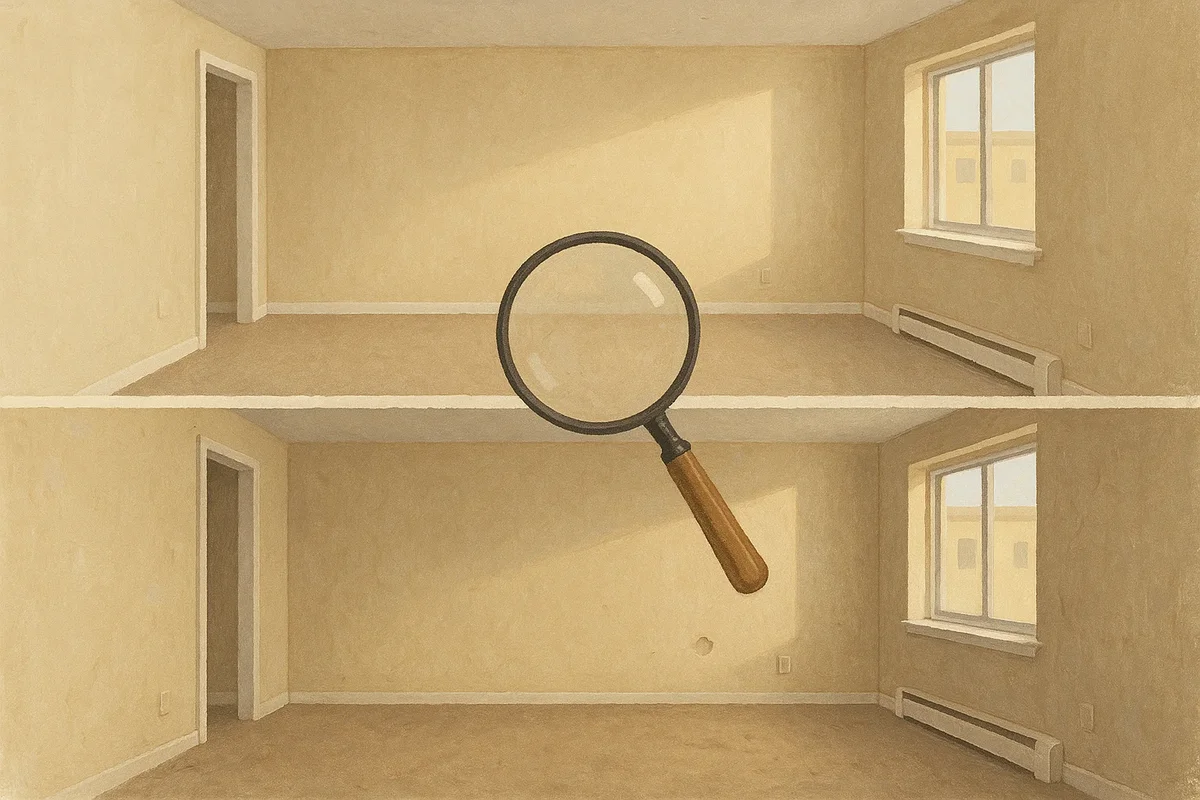
Side-by-side photo comparison is your strongest evidence. Move-in photo of the south wall: clean, two small nail holes. Move-out photo of the same wall: same nail holes plus a 4-inch gash and marker stains. The comparison tells the story without argument.
Tenant Acknowledgment
If the tenant is present, walk through the findings together. Ask them to acknowledge the condition or note any disagreements. Most tenants will not sign a move-out inspection that lists damage — but asking is worth the effort. Document their response either way.
The Security Deposit Return
Every state has a deadline for returning the security deposit after move-out. The range is 14 to 30 days in most states, though some allow up to 60. Missing this deadline can forfeit your right to any deductions — and in some states, exposes you to double or triple damages.
Your return letter should include:
An itemized list of deductions. Each deduction as a separate line item: "Repair hole in bedroom wall — $150" not "Various repairs — $500." Vague deductions get challenged and overturned.
Receipts or estimates. Actual invoices for completed repairs, or written contractor estimates for work not yet completed. "I estimate it will cost..." from the landlord is not sufficient. Third-party documentation is the standard.
Before/after photos. Include key comparison photos for each deduction. This is above and beyond what most states require, but it dramatically reduces dispute rates.
The remaining balance. A check for the security deposit minus justified deductions. Send it with the itemized letter.
Send via certified mail or equivalent with delivery confirmation. Keep a copy of everything. If the tenant disputes, your records need to be complete and accessible.
The Mistakes That Cost You
No move-in inspection at all. Every deduction becomes arguable. You have no baseline. Expect to lose any dispute.
Inspection after the tenant moves in. Furniture covers damage. You can't document what you can't see.
Vague condition notes. "Good condition" compared to what? "Normal wear" by whose definition? Be specific.
Not enough photos. Ten photos of a three-bedroom house is insufficient. You need 50-75 to cover every surface in every room.
Missing the return deadline. Know your state's timeline. Calendar it. Missing a 21-day deadline by one day can cost you the entire deposit in some states.
The move-in inspection takes 30 to 60 minutes. The move-out inspection takes the same. Those two hours — spread across the entire tenancy — protect thousands of dollars in potential deposit deductions, prevent disputes before they start, and create a standard of professionalism that good tenants respect and bad practices can't survive.
Document like you'll end up in court. Then you probably never will.